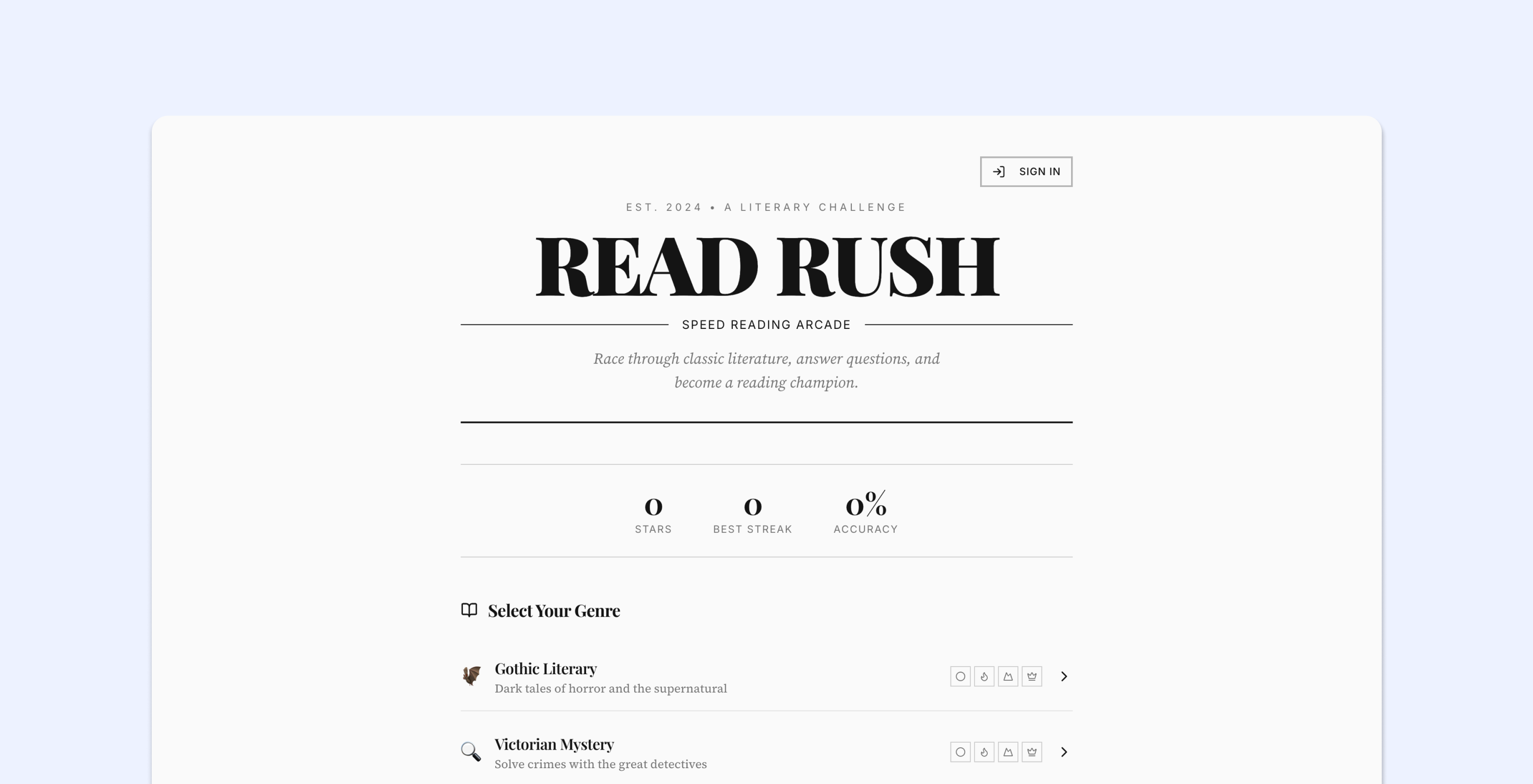
I created Read Rush to turn traditional reading comprehension practice into a fast, fun, game-like experience. Instead of dry test prep, I wanted to build something lively and motivating—an app that delivers SAT- and ACT-style questions using open-source literature while making the process feel energetic rather than intimidating.
AI prompted and conceptualized entire concept
Sole product designer on the project leading both UX and UI efforts from contempt to prototype.
My goal was to design an experience that helps users read faster, think critically, and build confidence, all while keeping each session quick and replayable.
The client requested a complete redesign with the priority of showing salon services and accepting bookings.
Most reading comprehension tools feel like homework. They’re often slow, text-heavy, and stressful, especially for students who want to prepare without burning out. I wanted to redesign that dynamic by creating a lightweight practice app that encourages speed, accuracy, and flow.
The challenge was to make test-style questions feel like part of a game: fast rounds, immediate feedback, escalating difficulty, and a sense of momentum.
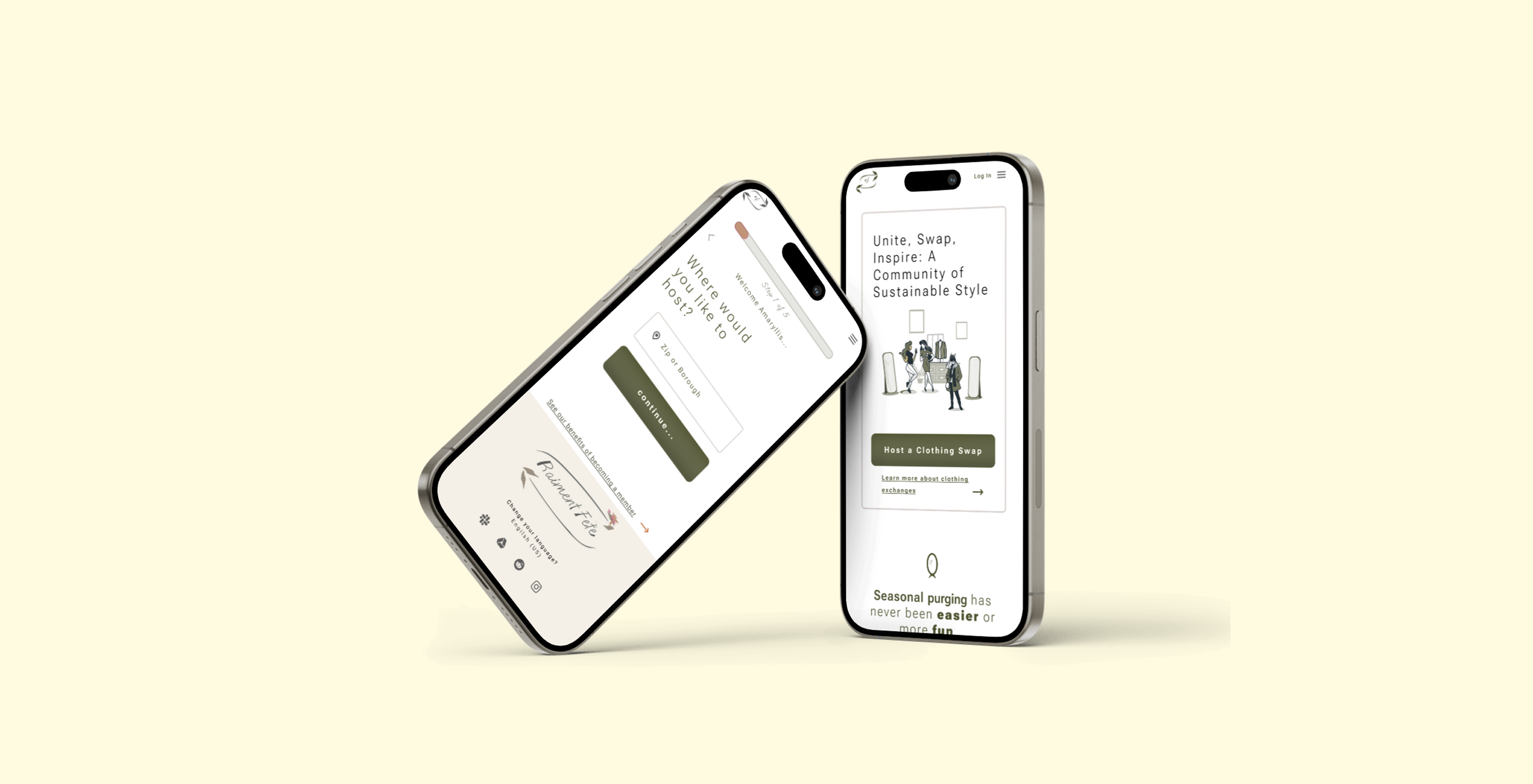
I interviewed members of the swapping community who had hosted events like this before. I wanted to understand why hosts became hosts and what their experiences entailed.
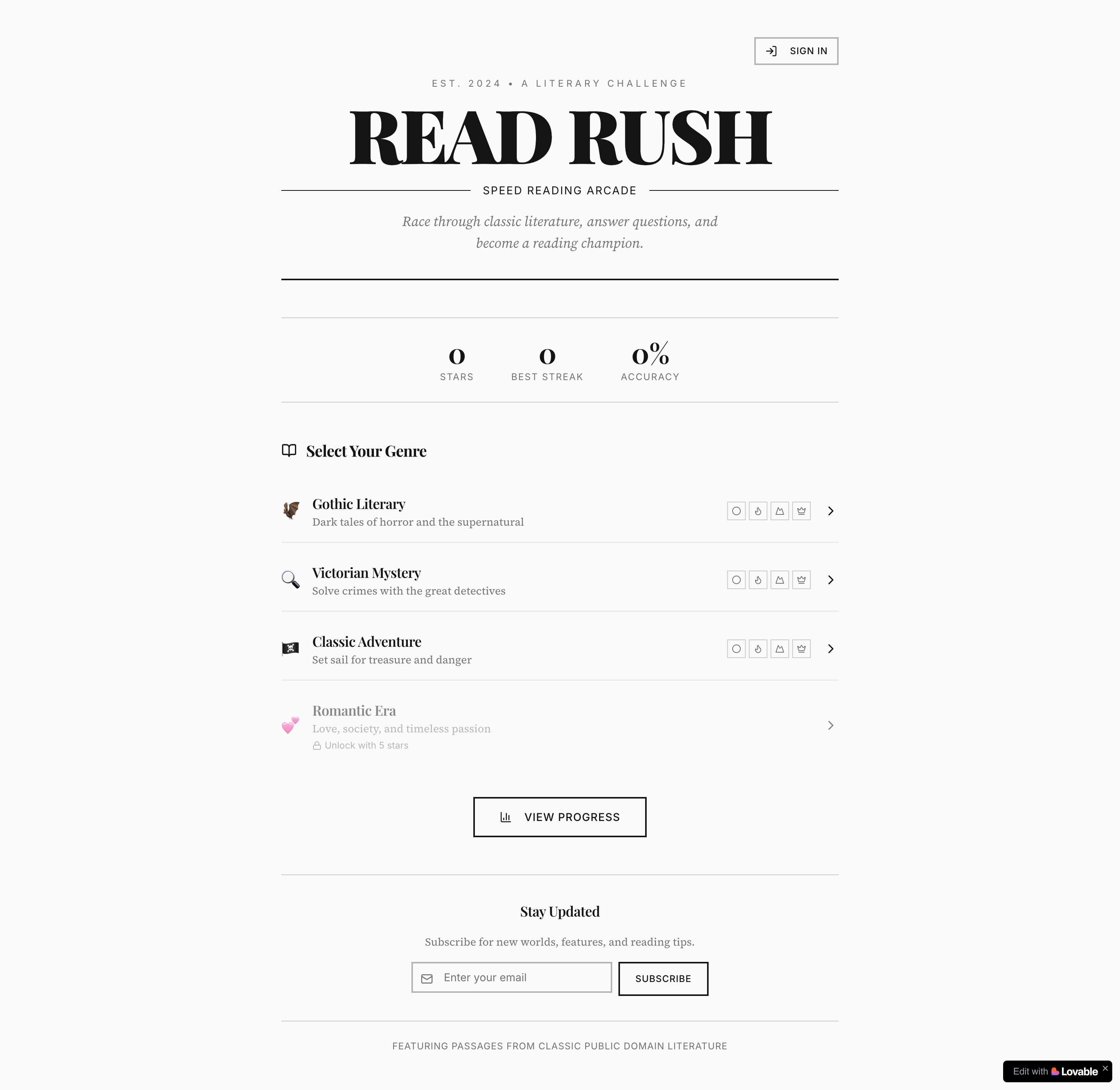
I needed a clear system that moved users from easier, shorter passages to longer, more complex ones. I built a progression model that mimics standardized tests:
Round 1 uses simple comprehension questions
Mid-level rounds add inference and detail recall
Final rounds include tone, theme, and vocabulary-in-context questions
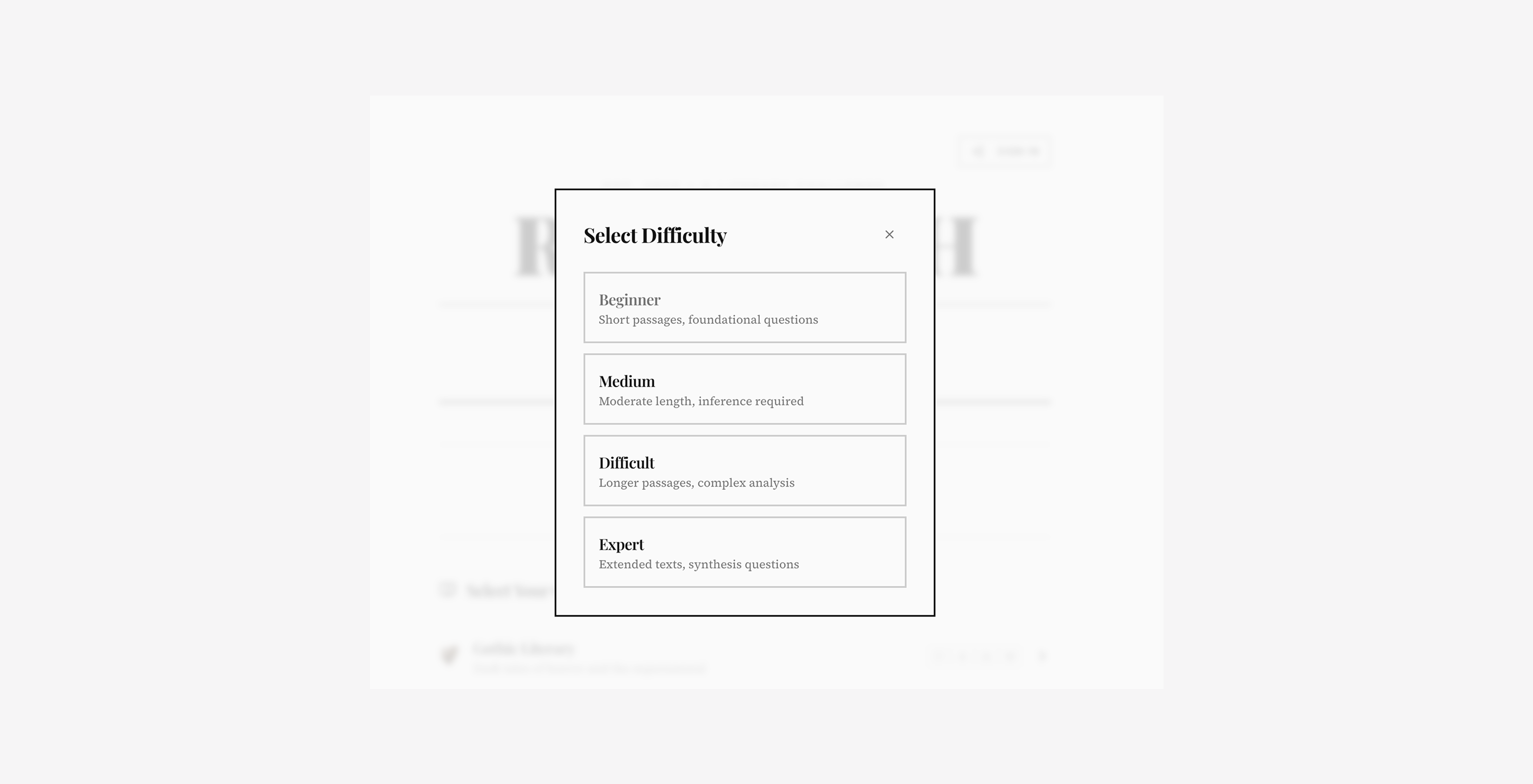
To keep the experience copyright-safe, I curated passages from open-source texts. The challenge was finding excerpts that were:
short enough for speed drills
rich enough to generate engaging questions
stylistically varied to mimic real exam prep
I built a small internal library that allows the app to pull passages that feel high-quality and academically relevant.
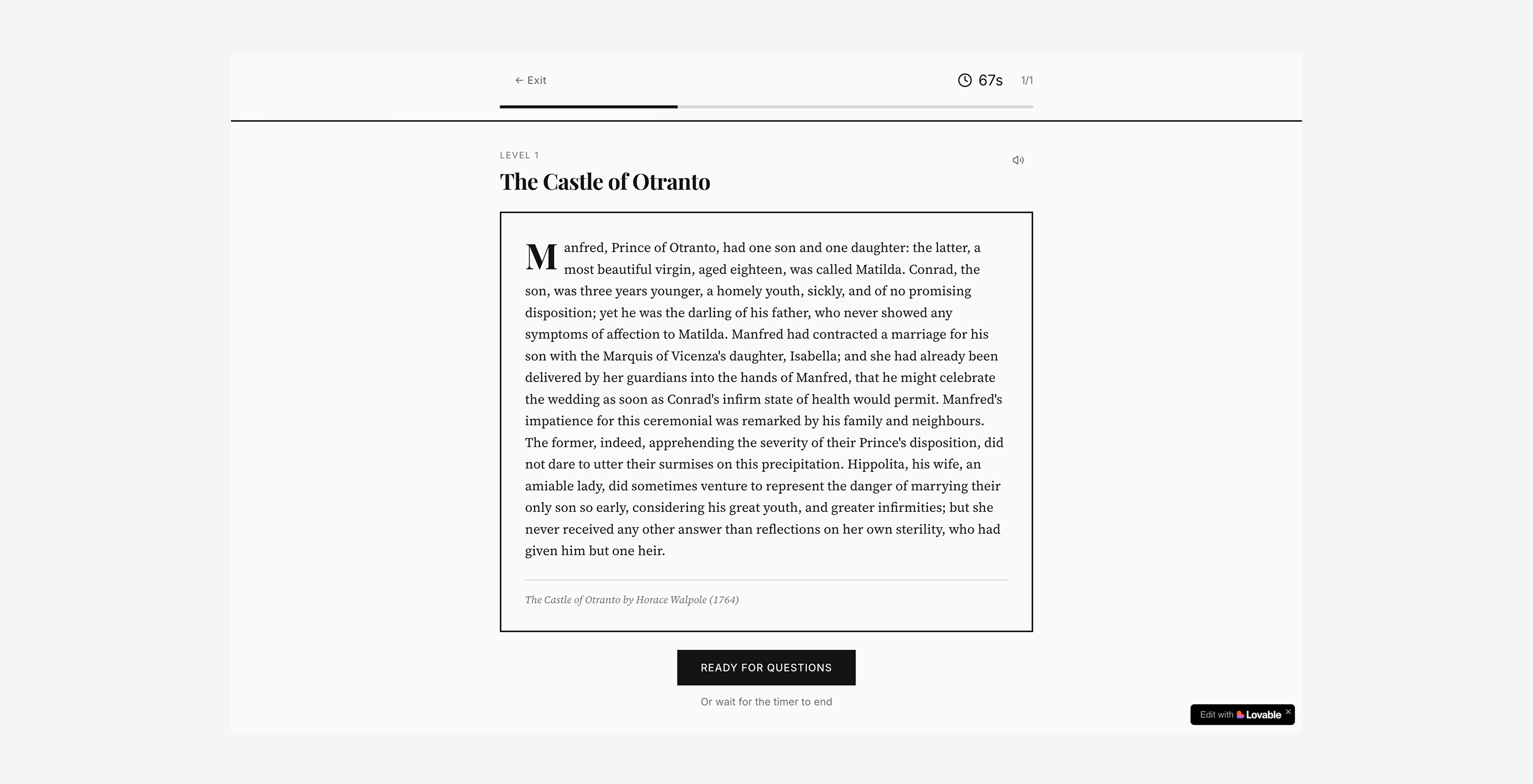
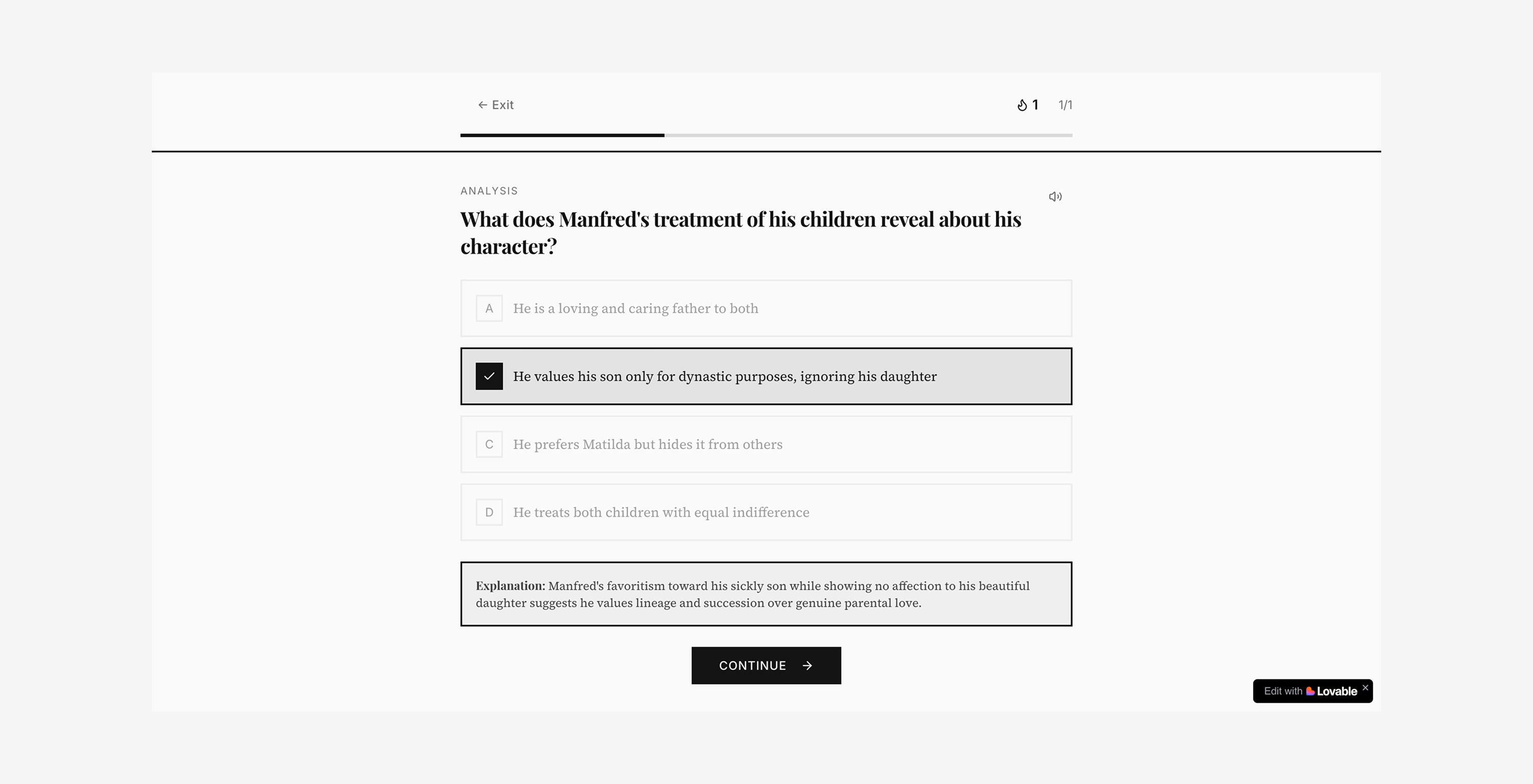
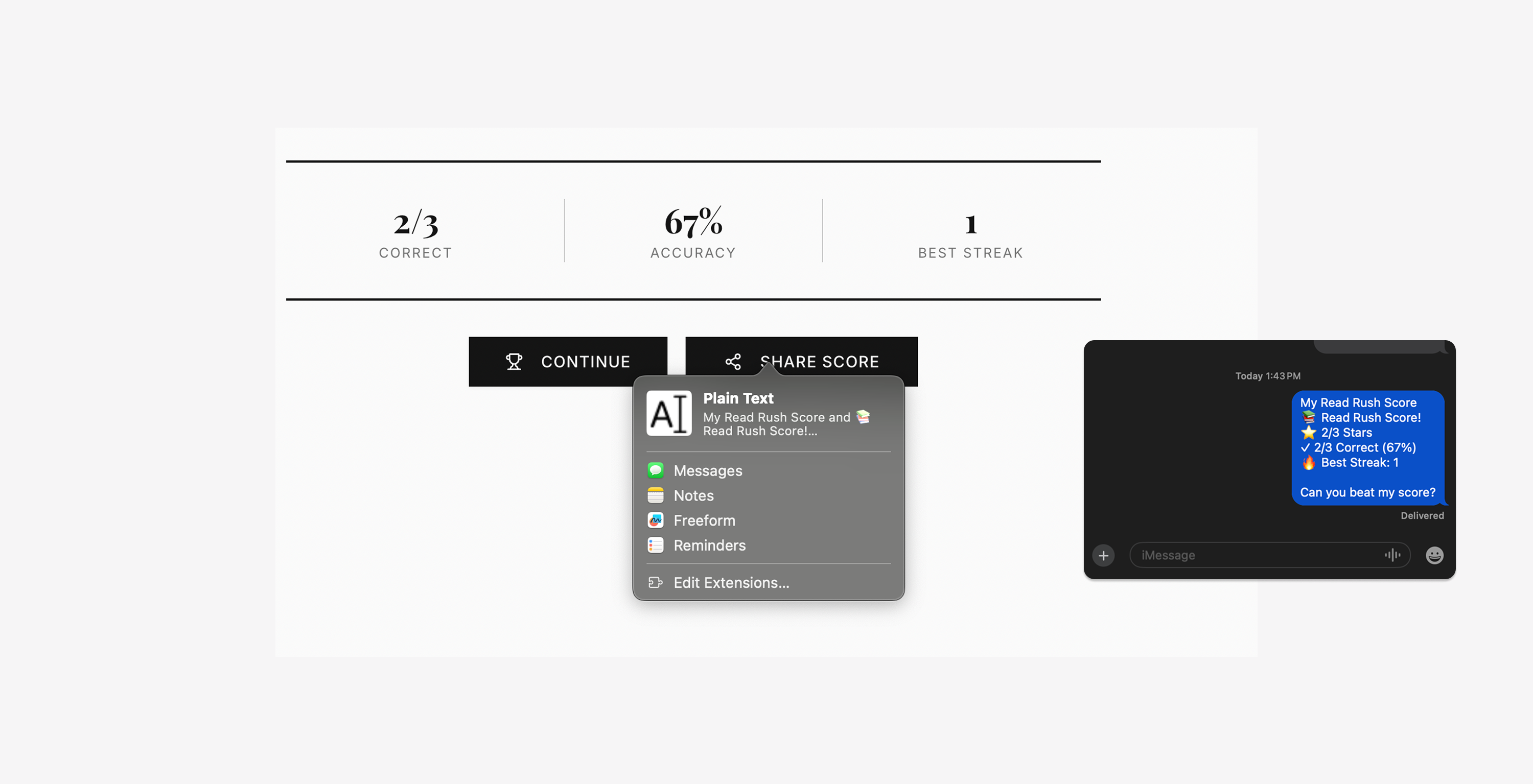
Even without dialogue, I wanted Read Rush to feel upbeat and alive. I used game design principles to guide the experience:
timed rounds for speed-building
instant scoring so users feel rewarded
fun, bold visuals to keep energy high
I built a small internal library that allows the app to pull passages that feel high-quality and academically relevant.
Using the framework of an event build, I laid out the decisions in this User Story. I found inspiration in apps like Partiful and Eventbrite, but with adding details about how to host a clothing swap.